






Key Takeaways
- Post-holiday inventory management reveals issues that peak season often hides
- Strategic stock positioning improves fulfillment speed, accuracy, and warehouse flow
- Proactive overflow planning and returns management help prevent backorders
- Inventory decisions made after the holidays impact fulfillment, packaging, and distribution all year
When the holiday rush ends, inventory takes center stage. What remains in the warehouse, where it is stored, and how quickly it can move all shape how smoothly fulfillment operates in the months ahead. This period offers a rare opportunity to reset inventory flow without the pressure of peak volume. Businesses that use this time to reposition stock, manage overflow, and process returns effectively often avoid backorders and operational slowdowns later in the year. Smart inventory management after the holidays is less about reacting and more about preparing for what comes next.
Why This Matters Now
The weeks following the holiday season set the tone for the entire year. Inventory left disorganized after peak volume can quietly create fulfillment delays, backorders, and rising storage costs as demand increases. Addressing stock positioning, overflow space, and returns management now allows businesses to make improvements without disrupting customers. This window offers a rare chance to reset inventory flow, strengthen warehouse efficiency, and prepare operations for steady growth in the months ahead.
When the holiday rush winds down, inventory becomes the focus whether businesses are ready for it or not.
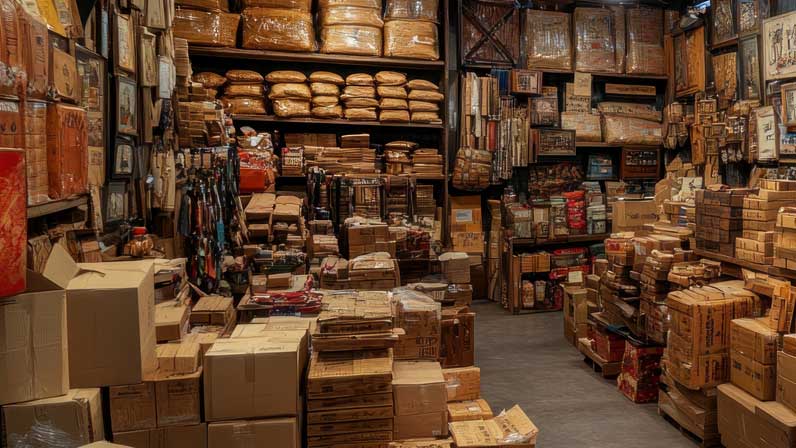
Peak season moves fast. Inventory is placed where it fits, overflow space gets used creatively, and the priority is keeping orders moving. Once that pressure fades, warehouses are often left with a mixed bag of leftover seasonal products, steady year-round sellers, new replenishment stock, and a growing volume of returns.
This moment matters more than many businesses realize.
The weeks after the holiday season are not just about cleaning up. They are about setting inventory up to support fulfillment, distribution, and customer expectations for the rest of the year. Smart inventory management during this period helps prevent backorders, improves warehouse flow, and creates breathing room before demand ramps up again.
The Post-Holiday Inventory Reality
After the holiday season, inventory rarely resets on its own.
Temporary solutions from peak season often stick around longer than planned. Overflow pallets remain in aisles. Products that sold well in December may now be buried behind slower-moving items. Returns accumulate while teams catch up on outbound orders.
Without a deliberate inventory review, these conditions quietly slow operations.
What starts as a few misplaced pallets can turn into longer pick times, inventory inaccuracies, and confusion around what is actually available to sell. These issues may not feel urgent in January or February, but they tend to surface later as missed reorder points and unexpected backorders.
Smart inventory management begins with acknowledging that post-holiday conditions are different and require a different approach.
Repositioning Stock for Everyday Demand
During peak season, inventory placement is often driven by urgency. Fast-moving products are placed wherever space opens up. Slower-moving items are pushed aside to make room.
After the holidays, stock positioning should shift to reflect everyday order patterns.
Fast-moving products should be:
- Easy to access
- Close to packing stations
- Positioned to support efficient pick paths
Slower-moving or seasonal inventory can be stored in secondary locations without interrupting daily workflows.

This type of repositioning reduces unnecessary travel time in the warehouse and helps fulfillment teams move orders more consistently. It also reduces errors, since pickers are not navigating around temporary storage solutions that were never meant to be permanent.
Repositioning inventory after the holidays is not about perfection. It is about making the warehouse work better under normal conditions.
Overflow Planning Is a Year-Round Strategy
Overflow space is often associated with peak season, but smart inventory management treats overflow as an ongoing consideration.
After the holidays, overflow may include:
- Leftover seasonal products
- Bulk replenishment inventory
- Returns awaiting inspection
- Promotional items planned for later in the year
Without a plan, overflow space becomes cluttered storage. Aisles shrink, access becomes difficult, and fulfillment slows.
Intentional overflow planning means clearly defining where excess inventory belongs and how long it should stay there. It also means regularly reviewing overflow areas to prevent them from becoming permanent bottlenecks.
When overflow is managed proactively, warehouses stay flexible and better prepared for new inventory arrivals.
Avoiding Backorders Before They Start
Backorders often feel sudden, but they usually develop slowly.
After the holiday season, many businesses pause reordering to assess demand and evaluate leftover stock. While this pause is understandable, waiting too long can create gaps in availability, especially for products that continue to sell steadily throughout the year.
Smart inventory management focuses on balance.
This includes:
- Reviewing post-holiday sales trends
- Identifying products with consistent demand
- Adjusting reorder points based on current sales patterns
The goal is not to rush into replenishment or overstock. It is to maintain continuity so customers are not met with delays or unavailable items.
Addressing potential backorders early helps protect customer satisfaction and prevents fulfillment disruptions later.
Returns Management Is Inventory Management
Returns often peak after the holiday season, and they have a direct impact on inventory accuracy and warehouse efficiency.
When returns sit unprocessed, inventory systems become unreliable. Products that could be restocked quickly remain unavailable, while warehouse space gets consumed by items waiting for inspection.
Effective returns management includes:
- Clear receiving procedures
- Designated areas for returns processing
- Consistent inspection and sorting workflows
- Timely updates to inventory records
When returns are processed efficiently, sellable inventory re-enters circulation faster. That reduces unnecessary reorders and keeps warehouse space organized.
Returns are not just a customer service issue. They are a core part of inventory management.
Cleaning Up Data to Match Reality
After peak season, inventory data does not always reflect what is physically in the warehouse.
Misplaced items, rushed counts, and temporary storage solutions can all contribute to discrepancies between systems and reality.

Post-holiday inventory management is a good time to reconcile those differences.
This may include:
- Verifying inventory counts
- Reviewing location accuracy
- Identifying recurring discrepancies
Accurate inventory data supports better decision-making across fulfillment, packaging, and distribution. It also reduces surprises as order volume increases later in the year.
Creating Space for What Comes Next
Inventory management after the holidays is not just about dealing with what remains. It is about preparing for what is coming.
New products, seasonal promotions, and ongoing e-commerce growth all require space and organization. Warehouses that remain stuck in peak-season layouts often struggle to adapt.
Resetting inventory flow now creates room for future activity without disrupting daily operations.
- Inventory Touches Every Part of the Operation
- Inventory management does not exist in isolation.
- When inventory is organized and accurate:
- Fulfillment runs more smoothly
- Packaging processes become more efficient
- Distribution planning improves
- Customer satisfaction increases
When inventory is disorganized, every part of the operation feels the impact.
That is why post-holiday inventory management deserves focused attention.
Using the Post-Holiday Window Wisely
The period after the holiday season offers something rare. Time.
There is space to evaluate, adjust, and improve without the pressure of high-volume order surges. Changes made now are easier to implement and easier to test.
Brands that use this window wisely often avoid repeating the same challenges later in the year.

How Jillamy Can Help
Smart inventory management after the holiday season requires more than a cleanup. It requires a strategy that supports fulfillment, warehousing, and distribution year-round.
Jillamy works with businesses to improve inventory flow, manage overflow space, support returns processing, and create warehouse environments that adapt as demand changes. From e-commerce fulfillment to packaging and distribution support, Jillamy helps brands build inventory systems that stay efficient long after the holiday season ends.
If your warehouse is still operating in peak-season mode, now is the time to reset.
Contact Jillamy to build an inventory strategy designed for consistency, flexibility, and long-term growth.